Relationship: Me & Others, The Sacred/Divine
Ages
- Kinder
- Early Years
- Primary Years
- Middle Years
- Secondary Years
- Post-Secondary Years
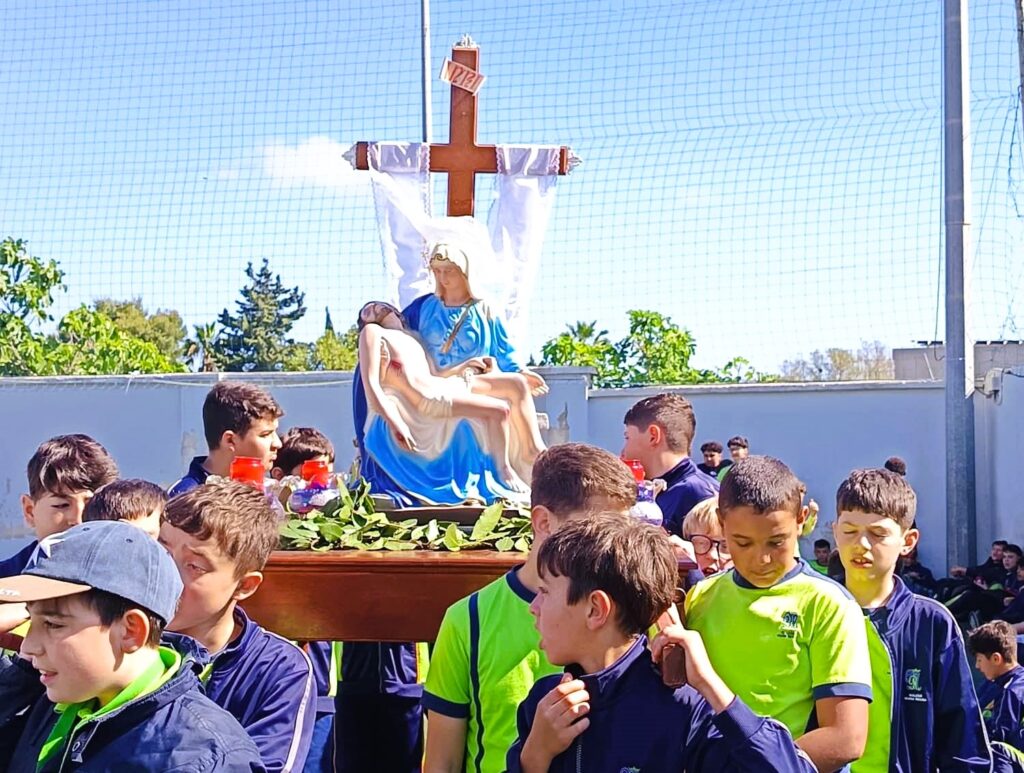
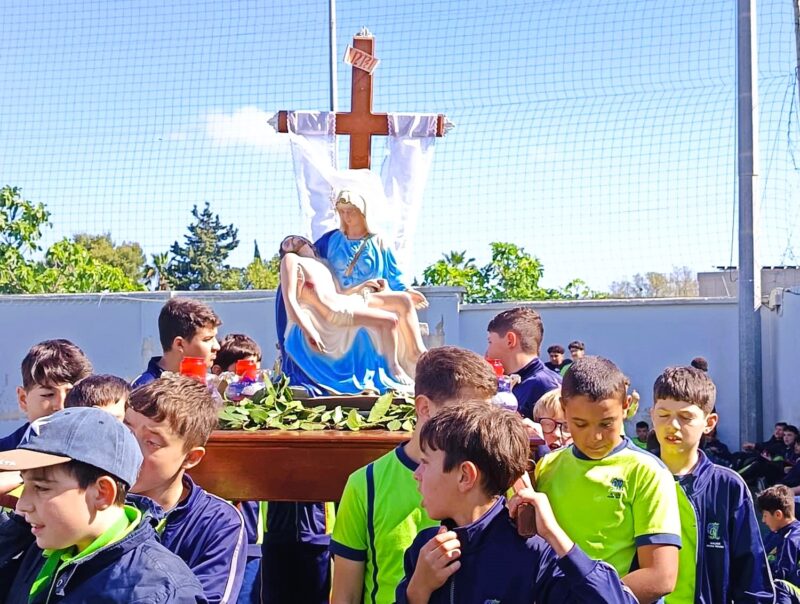
A procession is a prayer done with your whole body. You move slowly from one place to another to show your desire to walk with God prayerfully. Therefore, it aims to help the person grow in the 4 relationships: with God, with oneself, with others, and with all creation. The following information and reflections are intended to help educators and students in a school focus on the aim of the procession and avoid aspects that might blur spiritual growth.
1. L-Oriġini tal-Purċissjoni
Spjegazzjoni qasira għall-edukaturi
- Fit-Testment il-Qadim, il-poplu ta’ Iżrael kien jimxi flimkien lejn il-Tempju f’Ġerusalemm għall-festi.
- Ġesù kien jimxi mad-dixxipli tiegħu lejn Ġerusalemm.
- Il-Knisja tal-bidu kompliet din it-tradizzjoni meta l-insara kienu jimxu flimkien biex jitolbu u jqimu lil Alla.
- Maż-żmien, il-purċissjonijiet saru parti mill-festi prinċipali: Ħadd il-Palm, Corpus Christi, il-Festa tal-Madonna, il-patrun tal-parroċċa.
2. L-Għan Edukattiv
L-għalliema jistgħu jgħallmu lill-istudenti li l-purċissjonijiet jgħinuhom:
- Inaqqsu l-pass u jikkalmaw.
- Joqogħdu attenti.
- Jimxu flimkien b’rispett.
- Jesprimu l-fidi bil-moviment.
- Jorbtuhom ma’ festa jew mument importanti.
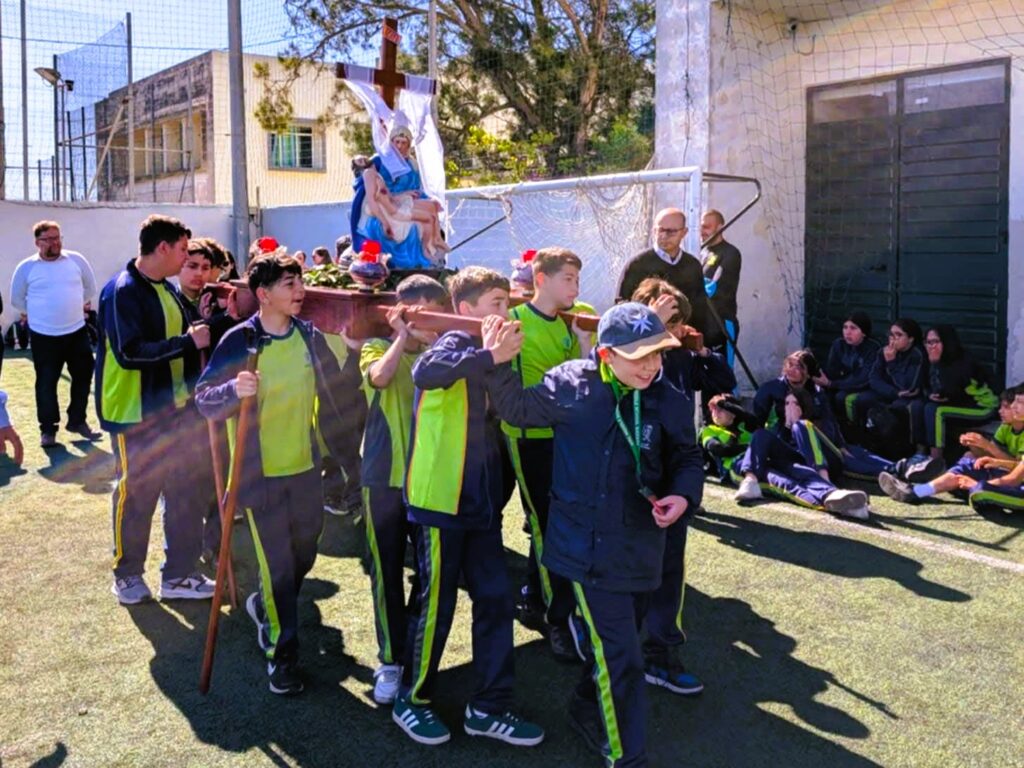
3. Għaliex nużaw statwa ta’ Marija jew tal-qaddis patrun?
- Tifhem li l-istatwa mhix oġġett ta’ qima. Hija sinjal li jfakkrek f’Alla.
- Tara l-istatwa biex tiffoka fit-talb.
- Tiftakar li l-qaddis jew Marija kienu nies li għexu l-Vanġelu.
- Tiftakar fil-virtujiet tagħhom.
- Titlob lil Marija jew il-qaddisin jgħinuk tgħix bħalhom.
- Timxi wara l-istatwa biex turi rispett u għożża.
- Tħossok parti minn komunità li temmen fl-istess mod.
- Tifhem li l-Knisja tonora lil min mexa wara Kristu b’kuraġġ.
- Tifhem li l-qaddisin jitolbu għalik fil-komunjoni tal-qaddisin.
- Tara kif il-fidi Kattolika tuża simboli biex tgħallem il-qalb.
4. Għan edukattiv tal-użu tal-istatwa
- Jgħin lit-tfal u ż-żgħażagħ jifhmu tifsira ta’ simboli.
- Joħloq rabta emozzjonali mal-qaddisin.
- Iħeġġeġ l-imitazzjoni ta’ eżempji tajba tal-qaddisin.
- Tapprezza l-proċess artistiku ta’ kif saret l-istatwa
- Isaħħaħ l-identità tal-iskola u tal-parroċċa.
Sommarju għall-Għalliema
Għaliex nagħmlu purċissjoni?
- Talba b’moviment.
- Inkunu Komunità magħquda.
- Mixja ta’ Riflessjoni.
- Rispett.
- Tradizzjoni ħajja.
- Tgħallem responsabbiltà u paċi.
Sommarju għar-Religious Counsellors u Chaplains
Meta tippjana purċissjoni:
- Agħżel intenzjoni ċara.
- Uża simbolu wieħed.
- Agħmel riflessjoni qasira lill-istudenti.
- Żomm mumenti ta’ silenzju.
- Talba fil-bidu u fit-tmiem.
- Spjega l-mixja flimkien.
- Qabbad mal-valuri tal-iskola.
- Ħeġġeġ lill-edukaturi biex jingħaqdu.
Spjegazzjoni għall-Assembly
- Nimxu flimkien għax aħna ta’ Alla.
- Nimxu għax il-fidi timxi.
- Nagħtu spazju għat-talb.
- Inġibu l-komunità flimkien.
- Ngħidu lil Ġesù: “Aħna rridu nimxu miegħek.”
1. Origin of the Procession
Short explanation for educators
- In the Old Testament, people walked together to the Temple in Jerusalem for feasts.
- Jesus walked to Jerusalem with his disciples.
- The early Church continued this practice when Christians walked together to join in prayer and worship and to honour martyrs.
- Over time, processions became part of key feasts: Corpus Christi, Palm Sunday, Our Lady of Sorrows, and patron saint feasts.
2. Educational Purpose
Teachers explain processions as moments where students learn to:
- Slow down.
- Pay attention.
- Walk together with respect.
- Express faith using movement.
- Connect a feast to daily life.
3. Why do we use a statue of Our Lady or the patron saint
- You learn that a statue is not an object of worship. It is a sign that points to God.
- You see the statue, so you focus your prayer.
- The statue reminds you of a real person who lived the Gospel.
- You remember the virtues of that saint.
- You ask Mary or the saints for help to live those virtues.
- You walk with the statue to show honour and respect.
- You feel part of a broader community that carries the same faith.
- You learn that the Church honours those who followed Christ with courage.
- You understand that the saint is part of the communion of saints and prays for you.
- You see how the Catholic faith uses signs to teach the heart.
4. Educational purpose of the use of a statue
- Helps students link symbols to meaning.
- Builds emotional connection with holy people.
- Encourages imitation of good examples.
- Appreciating the artistic process of how the statue was made.
- Strengthens the identity of the school and parish community.
Summary for teachers
Educational purpose of a Catholic procession
- Express faith with the whole body.
- Create unity among students.
- Support emotional regulation.
- Teach respect for sacred moments.
- Invite reflection on personal and social responsibility.
- Connect tradition with the present.
- Help students understand themselves as part of a community walking toward God.
Summary for religious counsellors & chaplains
When planning a school procession
- Choose a clear intention.
- Use one symbol: Bible, cross, icon, candles, palms.
- Prepare the students with a short reflection.
- Include silence.
- Add a simple prayer at the start and at the end.
- Explain the meaning of walking together.
- Link the procession to a value being lived in school.
- Invite staff to join to show unity.
Optional Short Explanation for Assemblies
Why do we walk in a procession
- We walk together to remember that we belong to God.
- We move from one place to another because faith moves us.
- We stay united because faith is lived in community.
- We walk slowly because prayer needs space.
We want to get to know you. To be able to bookmark your favourite content, please log in or sign up below.
User Sign Up
Discover more resources