

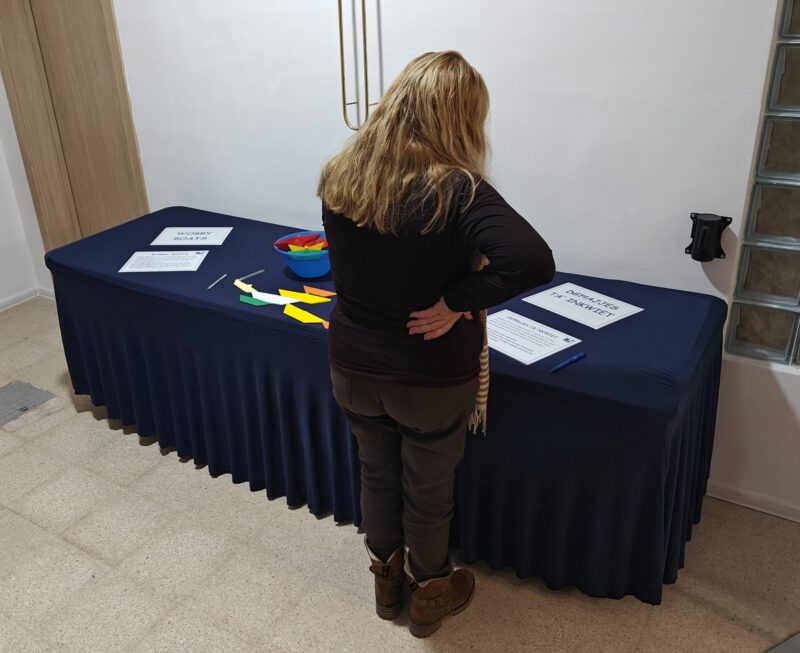
The prayer space I would like to set up is for older persons living in a residential care home (not in their own homes), which caters for around 100 residents. A meeting with the head of the home and/or the home company is held first to inform them of what a prayer space is and what it entails. Permission is then requested to set up the prayer space and to use some of the home staff for its duration. A large part of the residents are Roman Catholic; some are not. A meeting is also held with the home’s head, psychotherapist, social worker, and priest to discuss the needs of the residents. This helps target the prayer spaces to fulfil these needs, as well as designate an area and time for them.
The area to be used as a prayer space depends on the home and the number of residents expected to use the space. The ideal place would be an activity or craft room, so the prayer space can be set up for a few days without disrupting other activities. Given that daily activities are usually organised, part of the hall, dining area, or foyer could be partitioned. This makes it more accessible for residents and their visitors. Residents may be encouraged to visit alone or with visitors, which could facilitate communication and relationship-building and can also be used as an intergenerational activity. Since one of the spaces is planned for outdoor use (refer to appendix – WOW walk), an area must be chosen close to the outdoor area, e.g., the foyer, which has a door leading to the garden.
Preparation
Before setting up the prayer space, a meeting is held with all those involved in its setup and running, so that everyone understands the prayer space’s objective and their role. Training can also be provided to encourage staff to set up several prayer spaces throughout the year. Several assistants will be required; recruitment of assistants will be needed. Assistants can be Maltese carers or staff from the same home, social workers who usually assist within the home and the home’s activity organiser. The home’s activity organiser will take a central role, as s/he has experience organising activities within the home and can help make it a success. The activity organisers of other dwellings may also be recruited to gain more experience setting up a prayer space in their own homes. The staff chosen to assist each space will need to be kind, gentle people who are good listeners. Since so many staff members are required, a timetable is prepared to ensure each has a designated time slot. After setting up the prayer space, the staff will be given time to experience it for themselves. This helps them to understand what happens and what will be required of them. The staff involved will also prepare all the items needed for the prayer space (e.g., cutting paper shapes), set it up, and dismantle it. Gentle music and the setting up of audio in the area to be used are also prepared. An advert for the prayer space is also prepared for attachment to the home’s activities board in the foyer. This will be attached at the beginning of the week in which the prayer space will be held, and will include the dates and times that it will be available.
Guidelines for the prayer space
General precautions are used when setting up the prayer space; however, spaces will be adapted to the various physical and cognitive needs of these residents. The prayer spaces will therefore be on wheelchair-accessible tables, that is, tables that allow wheelchair users to wheel up to the table, with the armsides able to move under the table top. This allows the wheelchair user to access any material on the table easily. Red tablecloths will not be used, as this is a warning colour that could deter some residents from approaching the table. Mirrors will not be used, since they may be distressing to some residents with dementia. Items which may be swallowed or cause injury will be used under supervision or not used at all. Spaces do not require fine motor movements, which may become challenging due to arthritis. It is ideal to have prayer spaces with both an interactive and a writing component, so they are accessible to everyone, even those unable to write down their thoughts.
It is ideal if only 1 or 2 spaces require writing, as the older person may be unable to write, either because they are physically unable or because they never knew how. Each space will be assisted by someone to ensure the activity is accessible to anyone attending. The role of the assistant could be to read the instructions, to explain the activity further, to write the prayer provided by the older person if they wish or to assist with interaction with the prayer space (e.g. facilitating mobility from one space to another).
Residents will be informed that each space can accommodate up to 3 people. Fewer people in a prayer space could encourage the resident to communicate with staff in the space, especially if they are unable to write themselves.
Prayer spaces
The prayer space will be done during Advent. They were prepared with the Christmas wreath and candles in mind. One prayer space is dedicated to each candle. Also, I ensured that the prayer spaces encouraged reflection on relationships with the self, others, God, and the environment. Kindly refer to the appendices for the selected prayer spaces. Gentle background music will be provided, and guidance will be given to limit the number of people entering the prayer space.
Evaluation
On their way out, residents can be asked for feedback on the prayer spaces, and their responses can be recorded. A pre-set questionnaire is used so that the same questions are asked. After the prayer spaces are held, all feedback is collected, and a report is written to improve the setup of future prayer spaces, which can also be used to provide to the next home where the prayer space will be held.
Appendices:
These are the Prayer activities used:
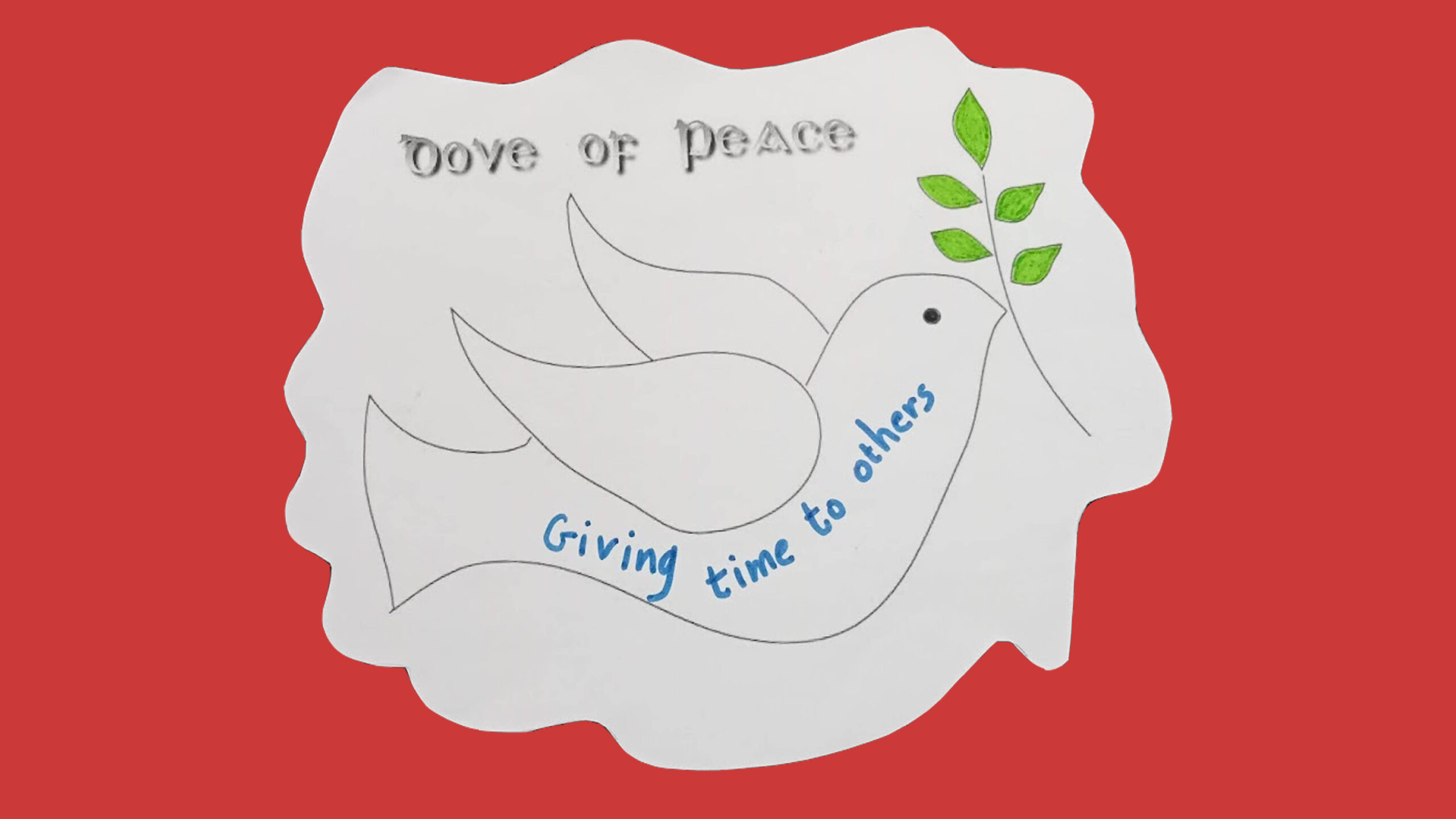 Let There Be PeaceOn the second Sunday of Advent, this prayer space helps one to reflect on peace and to pray for those people with whom one is not in harmony at this moment. |
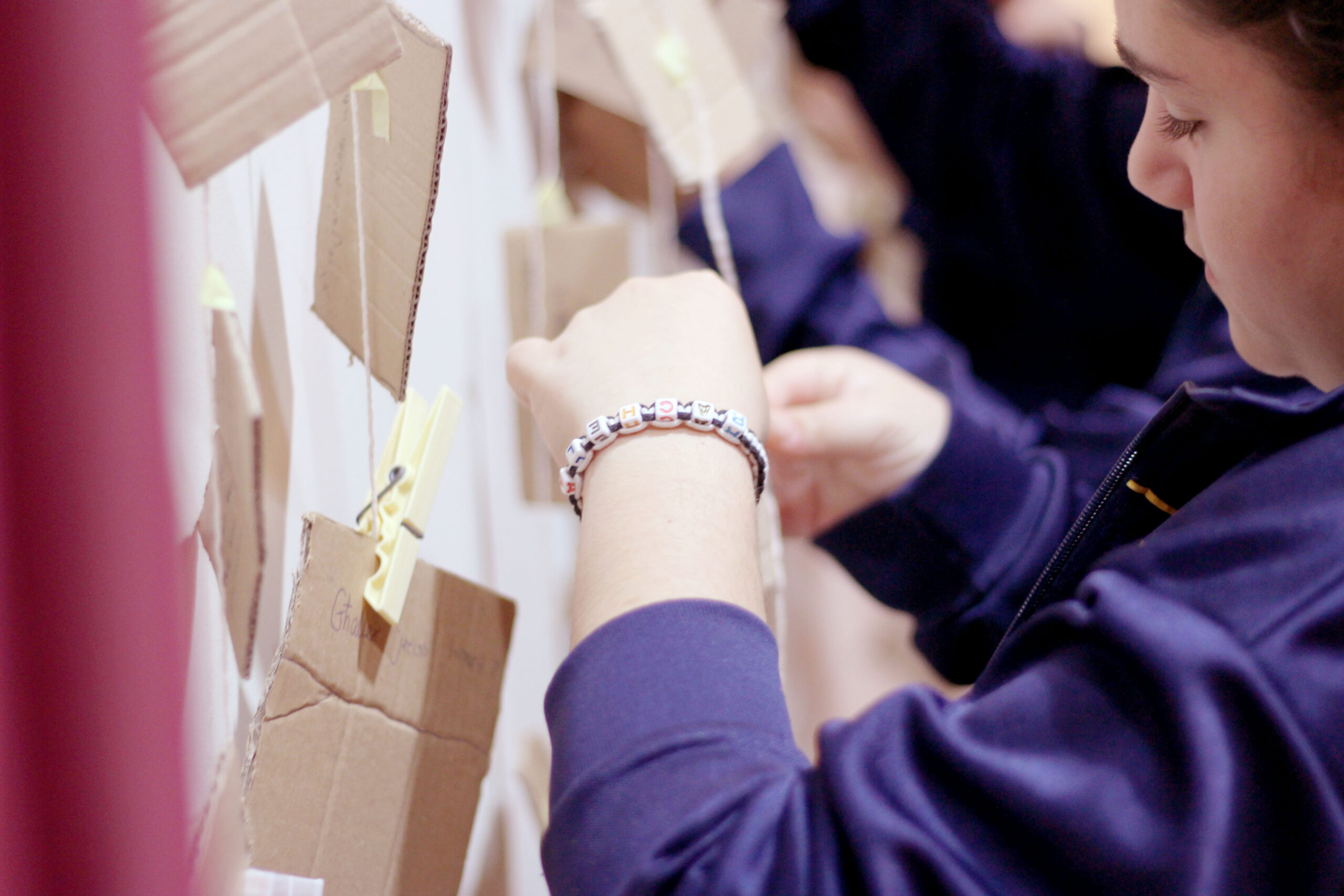 Big QuestionsDuring this prayer activity, one is given the space to ask his honest questions to God. |
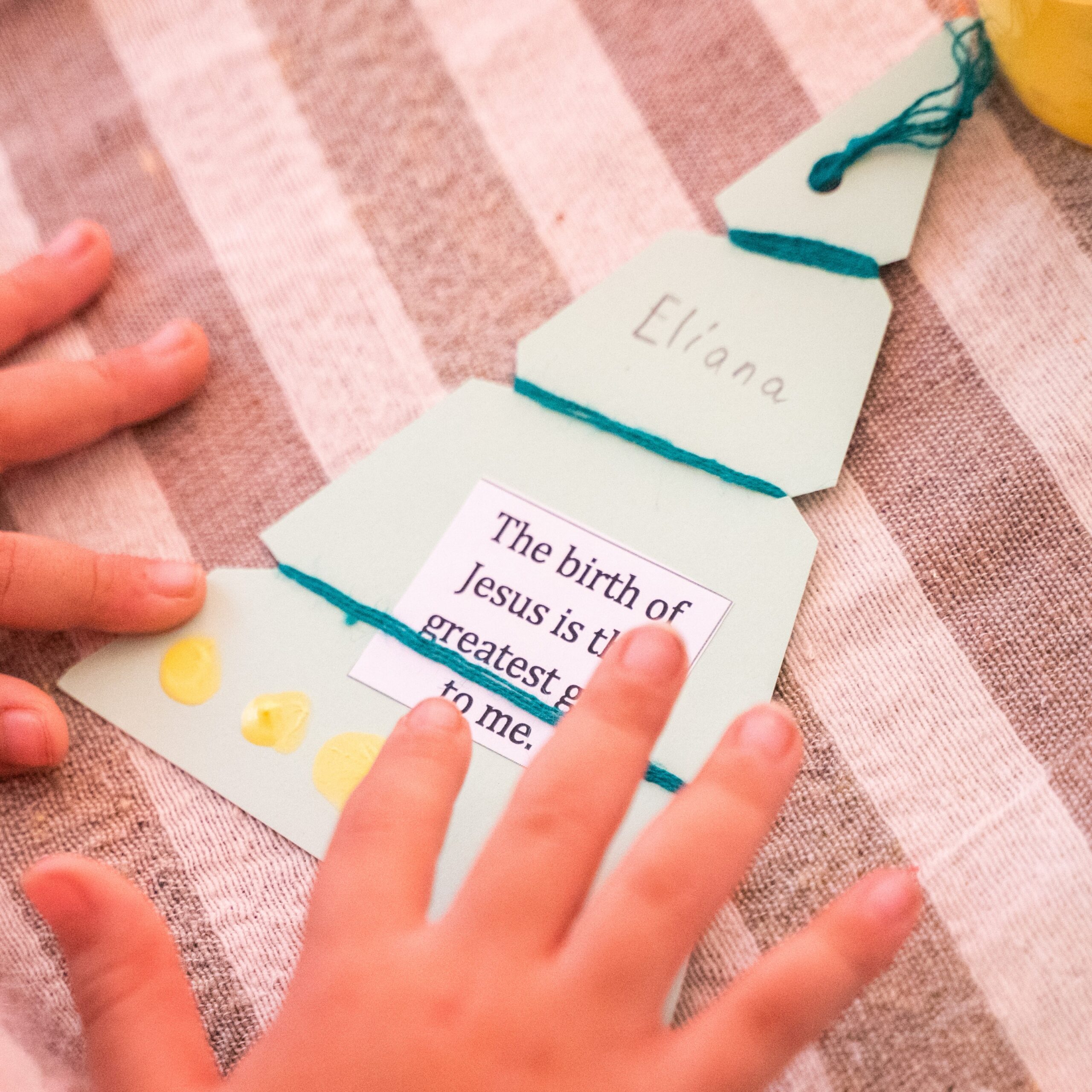 Christmas: FingerprintsIn this prayer space one maybecome aware that the best gift one can give to Jesus is oneself. A fingerprint will serve as a symbol of these special unique gifts. |
 Transforming ButterfliesDuring this Prayer Space, students are encouraged to reflect on how change is essential in one’s life, despite that sometimes we pass through fear and difficulties. |
This article is written by Ms Lindsey Spiteri.